



A recent research article published in Biology of Sex Differences examined how modifiable dementia risk factors may differ between women and men, and how those risk factors may be associated with cognitive performance. The study focused on a large group of adults from the Health and Retirement Study and looked at 13 risk factors connected to dementia and cognition.
This article is important because women have a greater lifetime risk of developing dementia, yet many studies on dementia risk do not fully examine how sex and age may influence risk factors. The authors explain that dementia prevention and risk reduction may need to become more personalized, especially when considering which risk factors are more common in women or men, and which may have stronger associations with cognition.
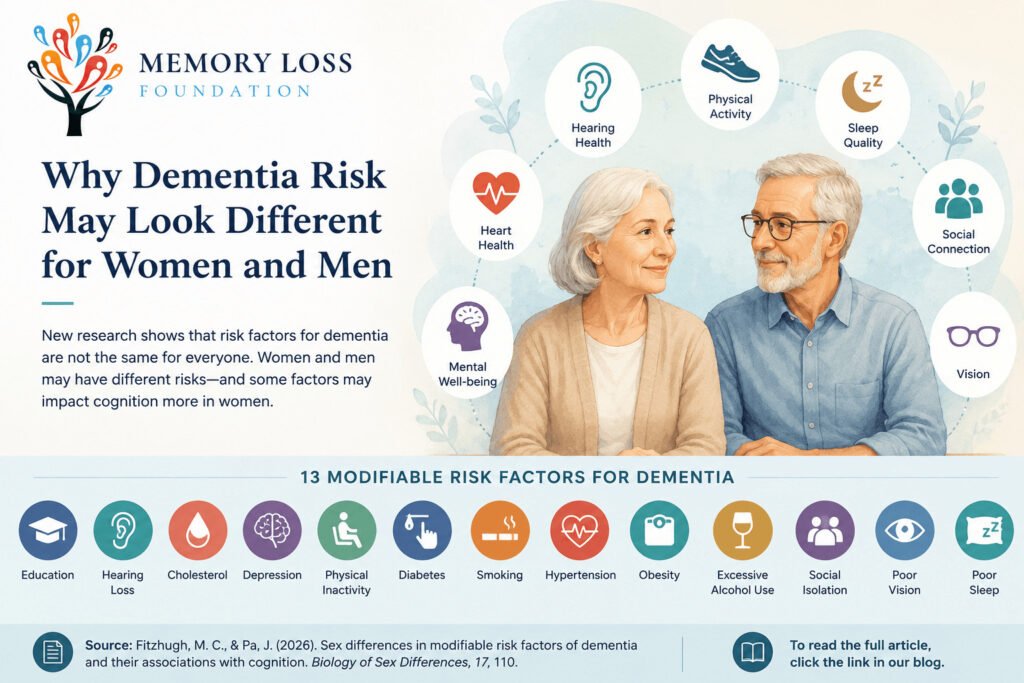
The study examined 13 modifiable risk factors: education, hearing loss, cholesterol, depression, physical inactivity, diabetes, smoking, hypertension, obesity, excessive alcohol use, social isolation, poor vision, and poor sleep. These are described as “modifiable” because they may be possible to address, manage, reduce, or monitor through health care, lifestyle changes, support, or prevention strategies.
The study included 17,182 participants with an average age of about 69 years. Women made up 59.2% of the sample. The researchers found sex differences in 10 of the 13 risk factors. Women had higher prevalence of several risk factors, including elevated cholesterol, depression, physical inactivity, smoking, poor vision, poor sleep, and fewer years of education. Men had higher prevalence of hearing loss, diabetes, and excessive alcohol use.
One of the key findings was that some risk factors appeared to have stronger associations with cognitive performance in women than in men. Hearing loss, diabetes, and hypertension were linked with greater negative effects on cognitive performance in women. Body mass index was also negatively associated with cognitive performance in women in their 50s and 60s, but not at older ages. The researchers also found that having a greater number of risk factors was associated with worse cognition in both women and men, but the decline was steeper in women.
At the same time, the article notes that prevalence and impact are not always the same. For example, hearing loss was more common in men, but in this study it appeared to have a stronger negative association with cognition in women. This is an important point for families, caregivers, health professionals, and community programs: the most common risk factor is not always the one with the greatest potential effect on cognition.
The researchers conclude that women’s greater dementia risk may be connected not only to having a higher prevalence of multiple risk factors, but also to the possibility that some risk factors may have stronger cognitive effects in women. They suggest that prevention strategies may need to consider both sex and age when identifying which risk factors to prioritize.
For caregivers and families, this research reinforces the importance of paying attention to brain health in a practical and ongoing way. It also highlights the value of discussing hearing, sleep, blood pressure, diabetes, vision, physical activity, and other health-related concerns with appropriate health professionals. The article does not suggest that dementia can always be prevented, but it does support the idea that understanding and addressing risk factors may be an important part of dementia risk reduction.
At Memory Loss Foundation, we believe that accessible education can help individuals, families, and caregivers feel more informed and supported. Research like this can help communities better understand why brain health is not the same for everyone, and why care, prevention, and support should be personalized whenever possible. financial costs.
Source
Fitzhugh, M. C., & Pa, J. (2026). Sex differences in modifiable risk factors of dementia and their associations with cognition. Biology of Sex Differences, 17, 110. DOI: 10.1186/s13293-026-00908-7